- Do all cryptocurrencies use blockchain
- Are all cryptocurrencies mined
- Are all cryptocurrencies based on blockchain
Cryptocurrencies all
Investing in cryptocurrencies is a little different than investing in shares of a company. Stock represents ownership of a business and a claim to profits the company generates las atlantis casino reviews. Purchasing coins of a cryptocurrency, though, is a speculative bet on the price movement of that digital currency — which can be highly volatile and is subject to the law of supply and demand since digital currency by itself is not a dynamic asset. Cryptocurrencies can be exchanged for other digital currencies or for fiat currencies like the U.S. dollar using a digital wallet on a trading app.
Tokens are not currency at all, though they can represent units of value. Instead, tokens are a form of programmable asset specifically used to create and execute smart contracts. When a token represents a unit of value, it can stand in to represent physical or digital assets, including cryptocurrency, though it is not a unit of currency in its own right. Basically, if you own a token representing an asset, you own a blockchain-verified smart contract connected to the asset in question.
Tokens, on the other hand, have far more uses than just digital money. Tokens are created on top of an existing blockchain and can be used as part of a software application (like to grant access to an app, verify identity, or track products moving through a supply chain). They can represent digital art, including non-fungible tokens (NFTs) that certify something as unique). There has even been experimentation using NFTs with physical assets, such as real-life art and real estate. Ether is an example of a token, which is used to make transactions on the Ethereum (CRYPTO:ETH) network.
Bitcoin is regarded as the first decentralized cryptocurrency using blockchain technology to facilitate payments and digital transactions. Instead of using a central bank to control the money supply in an economy (like the Federal Reserve in tandem with the U.S. Department of the Treasury) or third parties to verify transactions (such as your local bank, credit card issuer, and the merchant’s bank), Bitcoin’s blockchain acts as a public ledger of all transactions in the history of Bitcoin.
Do all cryptocurrencies use blockchain
As might be expected, Bitcoin (BTC 2.94%) is a favorite choice of billionaires looking to extend their wealth into new asset classes such as crypto. Lately, Ethereum (ETH 2.34%) has been attracting its own share of billionaire supporters.
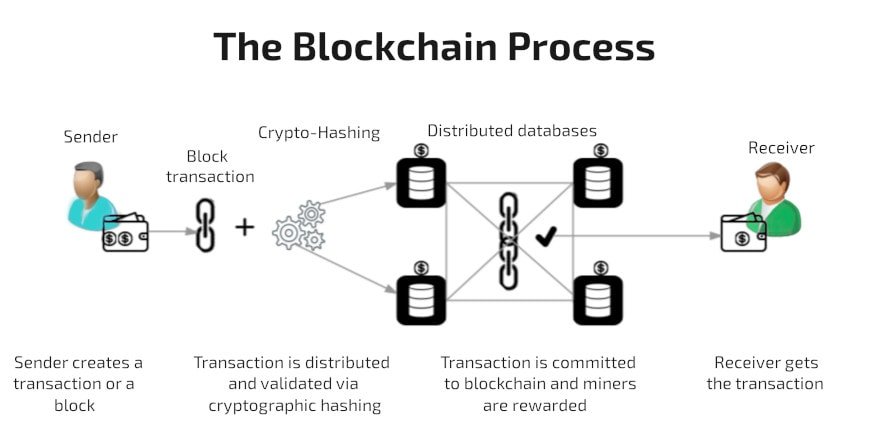
Crypto exchanges, such as those for Bitcoin and Ethereum, are the most common use case for blockchain technology, providing a secure and transparent system for processing and recording transactions. This technology ensures the integrity and accuracy of cryptocurrency transactions, making them resistant to fraud and hacking attempts.
Instead of having to outsource the idea of being able to trust in a transaction to banks and other intermediaries, blockchain puts trust out in the open by making everything visible. And because it is open and distributed, no single party on the network can exert undue control or influence on the ledger – or anyone attached to it.
As might be expected, Bitcoin (BTC 2.94%) is a favorite choice of billionaires looking to extend their wealth into new asset classes such as crypto. Lately, Ethereum (ETH 2.34%) has been attracting its own share of billionaire supporters.
Crypto exchanges, such as those for Bitcoin and Ethereum, are the most common use case for blockchain technology, providing a secure and transparent system for processing and recording transactions. This technology ensures the integrity and accuracy of cryptocurrency transactions, making them resistant to fraud and hacking attempts.
Instead of having to outsource the idea of being able to trust in a transaction to banks and other intermediaries, blockchain puts trust out in the open by making everything visible. And because it is open and distributed, no single party on the network can exert undue control or influence on the ledger – or anyone attached to it.
Are all cryptocurrencies mined
After each transaction is hashed, the hashes are organized into what is called a Merkle tree (also known as a hash tree). A Merkle tree is generated by organizing transaction hashes into pairs and then hashing them.
Founded in 1993, The Motley Fool is a financial services company dedicated to making the world smarter, happier, and richer. The Motley Fool reaches millions of people every month through our premium investing solutions, free guidance and market analysis on Fool.com, top-rated podcasts, and non-profit The Motley Fool Foundation.
The crypto mining system incentivizes security. Miners must successfully and correctly validate transactions, meaning that these individuals safeguard the same cryptocurrency they strive to receive as payment.
Are all cryptocurrencies based on blockchain
A cryptocurrency is deflationary when it has a fixed supply, meaning fewer coins are created over time. Inflationary cryptocurrencies have no supply cap and continue to increase in circulation. Understanding this difference can help you assess long-term value, especially if you’re holding or trading different types of digital assets.
A blockchain is a decentralized ledger of all transactions across a peer-to-peer network. Using this technology, participants can confirm transactions without a need for a central clearing authority. Potential applications can include enterprise blockchain applications, sustainability, tokenization, fund transfers, supply chain tracking and many other areas.
What are Bitcoins used for? Bitcoins can be used to buy merchandise anonymously. In addition, international payments are easy and cheap because bitcoins are not tied to any country or subject to regulation. Small businesses may like them because there are no credit card fees. Some people just buy bitcoins as an investment, hoping that they’ll go up in value.
Who started Bitcoin Mining Pools? Bitcoin Mining Pools have been around since 2010 and have had many different companies behind them. In 2010, Slush was the first bitcoin pool to be launched. The next big step was in 2011 when BTC Guild started. In 2012, Deepbit emerged and Rubycoin and Eligius have been launched in 2013. You’ll find that most of the bitcoin mining pools are based in China, where the climate is very favorable for their servers.
Crypto exchanges, such as those for Bitcoin and Ethereum, are the most common use case for blockchain technology, providing a secure and transparent system for processing and recording transactions. This technology ensures the integrity and accuracy of cryptocurrency transactions, making them resistant to fraud and hacking attempts.
Leave a Reply